I stumbled upon Neocities more or less by accident. I was probably looking for a platform that could fulfill my need for a creative community that isn’t entirely dominated by online mainstream and big corporations. How exactly I ended up there, I can’t quite remember. But I came across Neocities, which seemed quite familiar by name. With good reason, as it turned out to be the successor of Geocities.
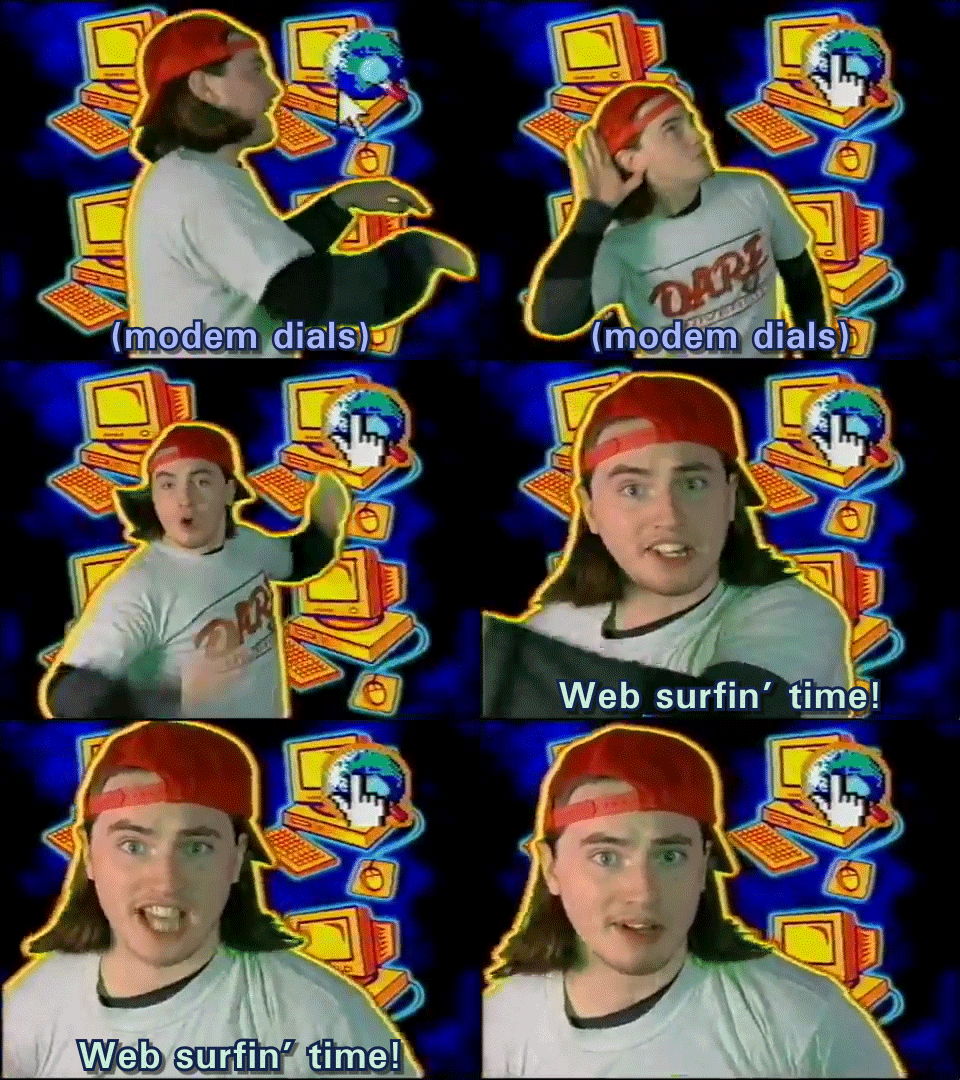
”Massive web corporations flush with stock market cash acquired startups for billions of dollars, like rich brats that wanted a cool new toy, but then quickly got tired of it and threw it away. And in the end, we lost a lot of great ideas, companies, and user content that would have otherwise prospered.”
Neocities Blog
In German: “In der Vergangenheit haben große Webunternehmen, gespeist von Börsengeldern, Startups für Milliarden Dollar übernommen, wie verwöhnte Kinder, die ein cooles neues Spielzeug wollten, es aber schnell leid waren und es wegschmissen. Und am Ende haben wir viele großartige Ideen, Unternehmen und Benutzerinhalte verloren, die sonst blühen hätten können.”
The same happened to Geocities. I also had a website there, or even several. Not just there, but also on similar services. That’s how I first started to become interested in coding and found joy in it.
The Nostalgia of Geocities
With the disappearance of Geocities and similar services—and thus the end of the beloved internet culture—I felt a personal void. Although I later enjoyed Tumblr and its community, that also faded after Yahoo took over the service. When I eventually learned about Neocities, I couldn’t resist. Currently, my only Neocities project is a small, personal website with no clear theme. But that’s okay. The beauty of it is the freedom. In the future, I plan to get a supporter account to support the platform.
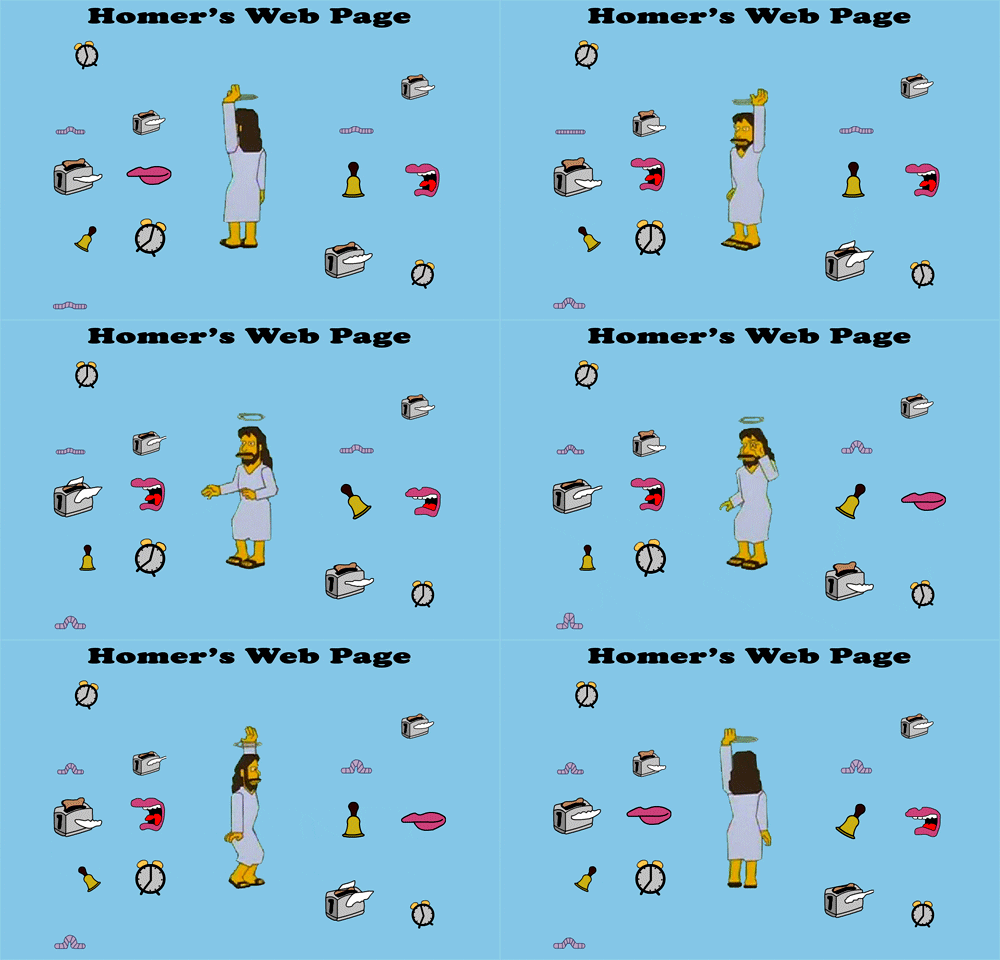
The true beauty of Neocities lies in its creative community, which mostly delights in the aesthetics of the old web. The immense variety of imaginative and unique websites is inspiring. It’s amazing to see how people make their interests and passions visible and create their own space on the internet. This individuality is wonderful, and anyone can create and host their site for free and with simple means—a great incentive to explore web design and development and gain basic knowledge in HTML and CSS.
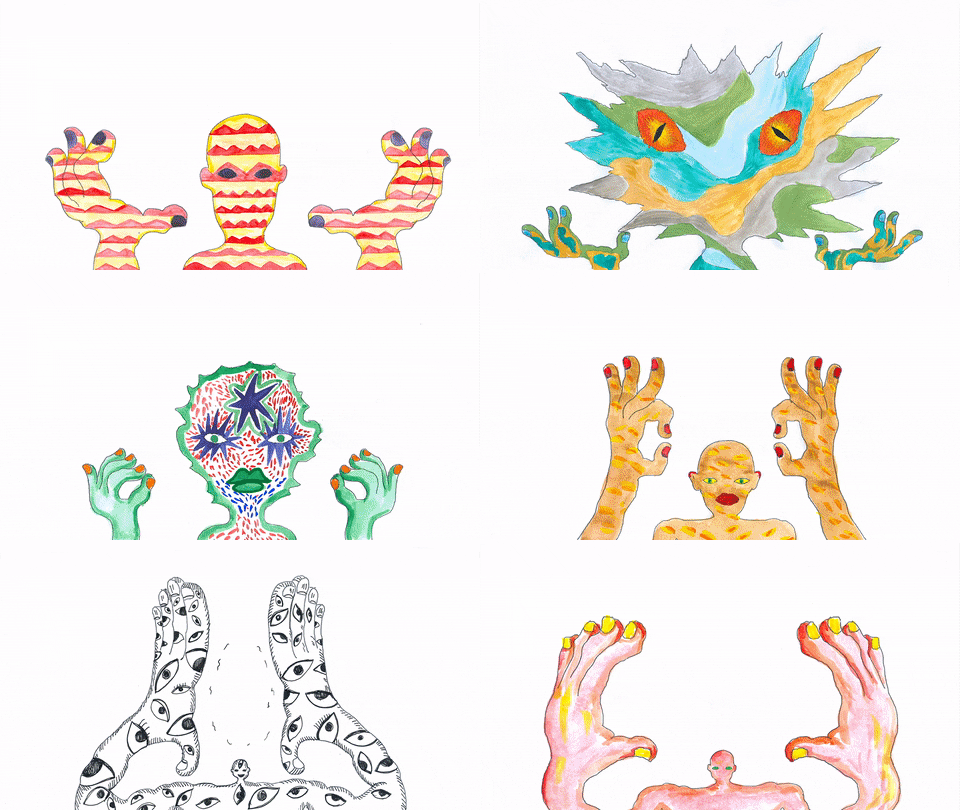
For me, Neocities is part of the Indie Web, which stands for personal freedom, self-expression, and control over one’s own data. It’s about deciding what and how much to share without compromises. The freedom to design content individually is best achieved with a self-built website on a web host, like this site that runs on GitHub and Netlify. My Neocities site, on the other hand, is reserved for hobbies. Both sites share the fact that I maintain control over my data—no algorithms, no pressure, just individual freedom.
The choice of platform has a huge impact on the content published. On platforms with complete freedom of expression and design, you can present yourself as you wish, without worrying about trends, algorithms, or comparisons. You can develop freely, away from haters. Choosing the right platform allows you to figure out what’s truly important, what you really want to share—without restrictions and judgments.
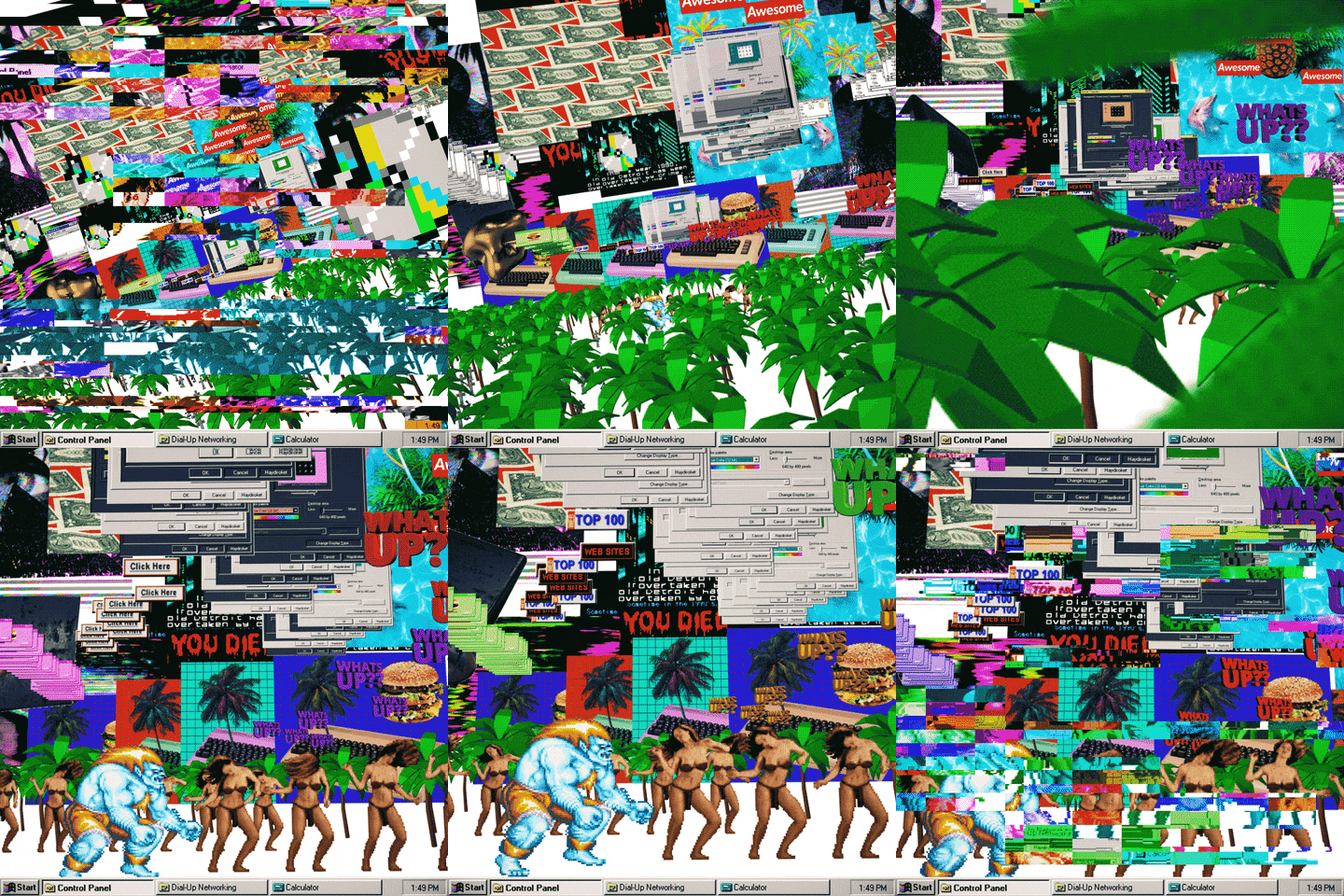
The diversity and individuality of Neocities sites are inspiring and spark new ideas. Some may seem a bit crazy, but that’s part of the creative expression. In contrast, social media platforms like Facebook or Instagram seem uniform and cold. A personal site says more—digital identity remains (once again) one’s own.
”own your data, make what you need, use what you make”
(A principle of the Indie Web)
Content Management Systems (CMS) or website builders don’t quite measure up. The templates are often mainstream and bland. The freedom to customize themes or even develop your own is limited. A small, static site like this one is comparatively faster and lighter. Personally, I find the numerous plugins (thinking of WordPress) overwhelming for a personal site. Moreover, these are plugins or extensions from third parties, which might not work well with each other, are no longer supported or updated, need adjustments, and all such things. However, for business websites, online magazines, and anything that uses a user database or needs updates from non-tech-savvy users, I find CMS like WordPress ideal.
In the world of Neocities and the Indie Web, there is diversity, freedom, and space for the uncompromising expression of creativity. Here, you can be yourself without having to bend.
Neocities: A Selection
Here’s a small collection of Neocities sites I follow—my personal best of:
HUBBARDIAN
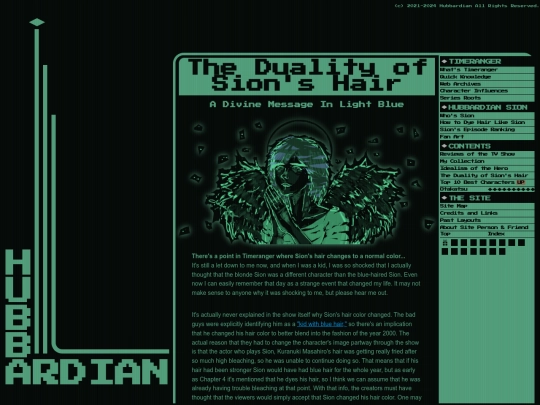
Visit Website [↗]
Solaria’s Webspace
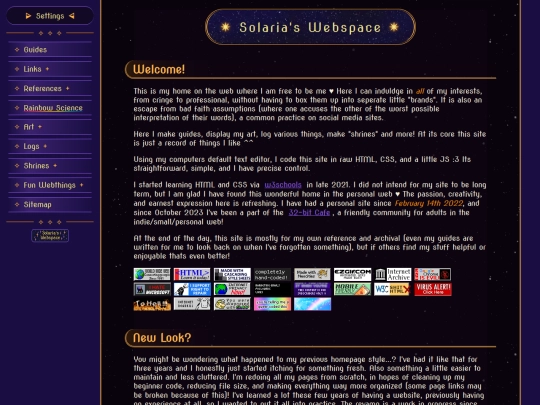
Visit Website [↗]
Hotline Cafe
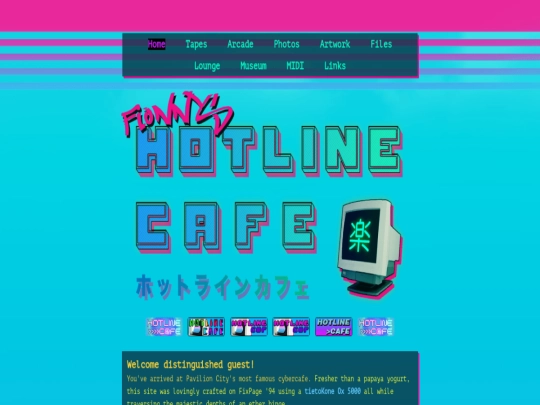
Visit Website [↗]
ninacti0n’s Lab
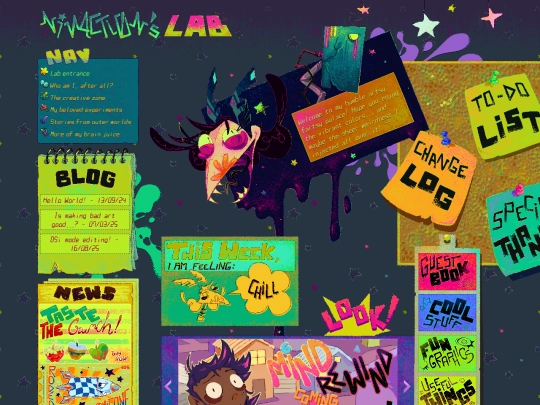
Visit Website [↗]
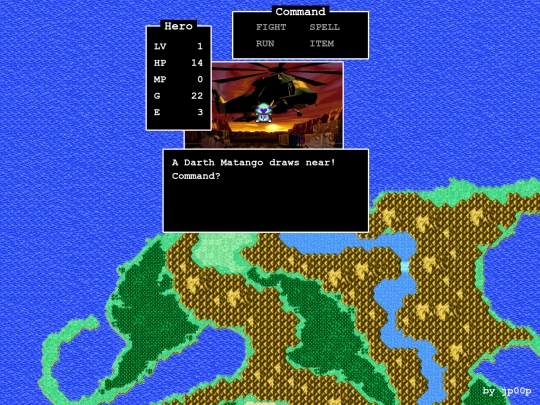
Dragon Quest: The Ultimate Game Experience
Visit Website [↗]
That’s all from me for today. Thank you for stopping by, and see you soon! ✌️